
Skip to content

LLMs1 min read

ChatGPT Images 2.5 Released: Improved Instruction Following

OpenAI’s ChatGPT Images 2.5 models now support multi-turn instruction following, faster response times, and better subject preservation in reference images. Two new model IDs, Sunburst and Flare, are available via the API.

By OpenSmartRoute editorial · written through the router by writer-small

From Simon Willison - “Introducing ChatGPT Images 2.5

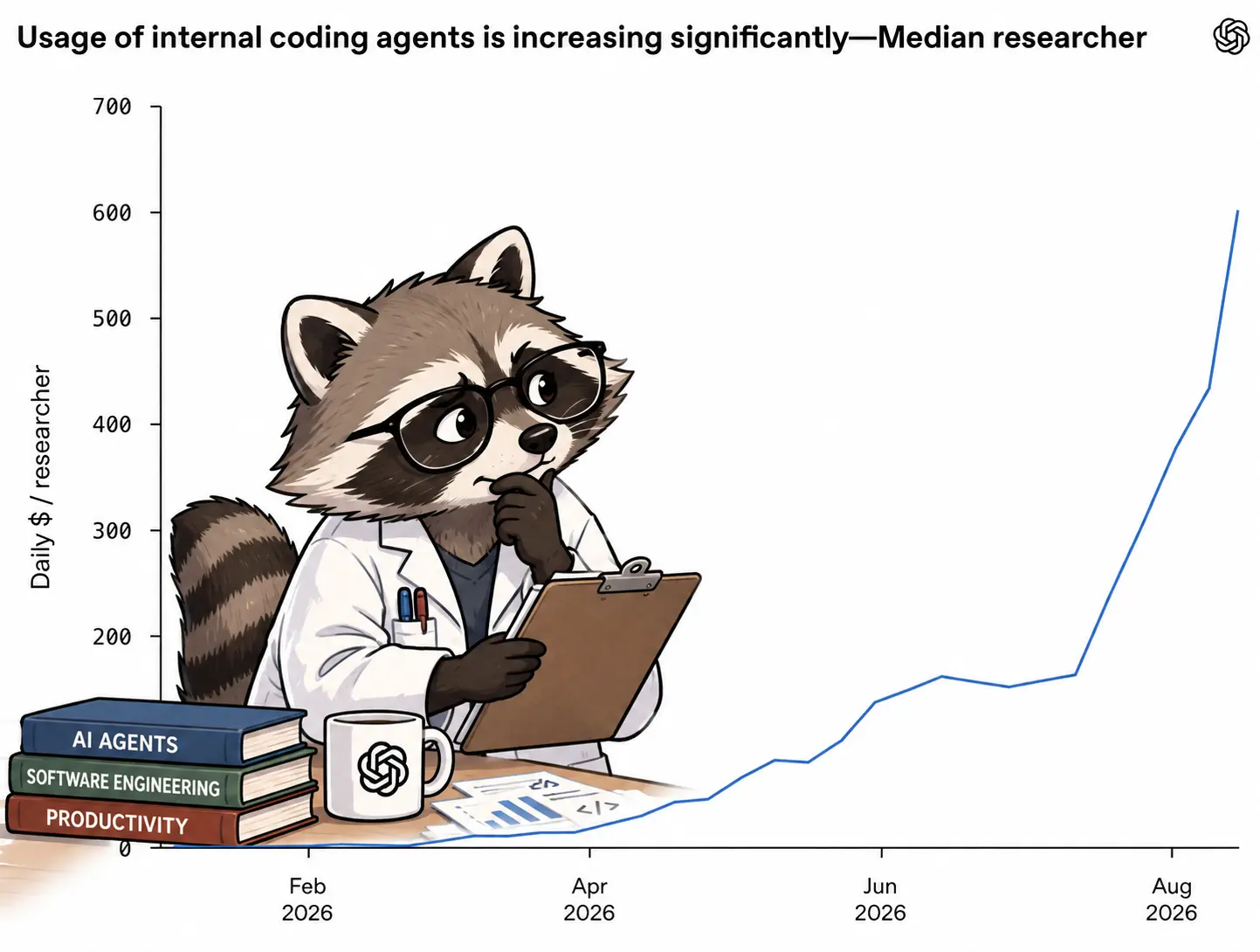
Line chart with cartoon illustration. Title: "Usage of internal coding agents is increasing significantly—Median researcher". Y-axis labeled "Daily $ / researcher" from 0 to 700; x-axis shows Feb 2026
Line chart with cartoon illustration. Title: "Usage of internal coding agents is increasing significantly—Median researcher". Y-axis labeled "Daily $ / researcher" from 0 to 700; x-axis shows Feb 2026. Image: Simon Willison (original)

OpenAI’s image generation models have been used across more than 3 billion images. The latest release, ChatGPT Images 2.5, improves instruction-following ability across multiple turns. Response times have also been reduced. The models are better at preserving the subjects in reference photos. Two new model IDs are available in the API: gpt-image-2.5-sunburst and gpt-image-2.5-flare. The openai_image.py CLI tool has been upgraded to support passing in one or more reference images. This allows users to specify reference images for the image generation process. The Sunburst model is recommended for workflows where editing precision is most important, while Flare is suitable for fast, high-quality everyday image generation.

Source: https://simonwillison.net/2026/Sep/8/introducing-chatgpt-images-25/

Published Sep 8, 2026 · updated Sep 9, 2026 · 107 words

Keep reading

Related posts

More in LLMs

LLMs1 min read

Query Rewriting Enhances RAG Performance Through Complementarity

Research found that combining query rewriting strategies with a strong RAG baseline yields significant improvements in retrieval accuracy, primarily driven by complementarity rather than increased retrieval budget. A cost-aware router further optimizes this approach.

LLMs1 min read

MedWER: A Fixed Term List for Medical ASR Evaluation

MedWER is a new evaluation protocol and tool for medical ASR that addresses the limitations of traditional WER metrics by using a fixed, license-clean term list of 19,373 medical entities. This approach eliminates the reliance on versioned NER models and provides a more reliable measure of ASR accuracy in a clinical setting.

LLMs1 min read

ModularPhaseNet: Discretized Phase Geometry for Transformers

ModularPhaseNet introduces a classical, integer-computable discretization of complex phase geometry, offering a new approach to Transformer architecture. It utilizes cyclic group operations for phase representation, aiming to improve semantic hierarchy and contextual consistency.