
Skip to content

Blog

Results for “agent evaluation”

Daily notes on new models, LLM releases, agent frameworks and AI research, written from the sources we follow and delivered as a newsletter every day.

Get the daily issue

Every new post of the day, in one email. Confirmation required.

Research1 min read

LLM Agent Societies Show Value Drift in Simulations

Research simulating diverse LLM agent societies reveals significant value drift, with over 50% of personas failing to initially align with assigned WVS profiles and a 2-7% drift after conversations. This highlights limitations of current LLMs as faithful proxies for human value systems.

From arXiv cs.AI
Research1 min read

LLMs Struggle with Second-Order Social Reasoning

Research reveals Large Language Models consistently overestimate social sanctions and misrepresent human responses to norm violations. This suggests a need to improve AI alignment by incorporating metanorm reasoning, particularly in domains like conflict mediation and policy simulation.

From arXiv cs.AI

Agents1 min read

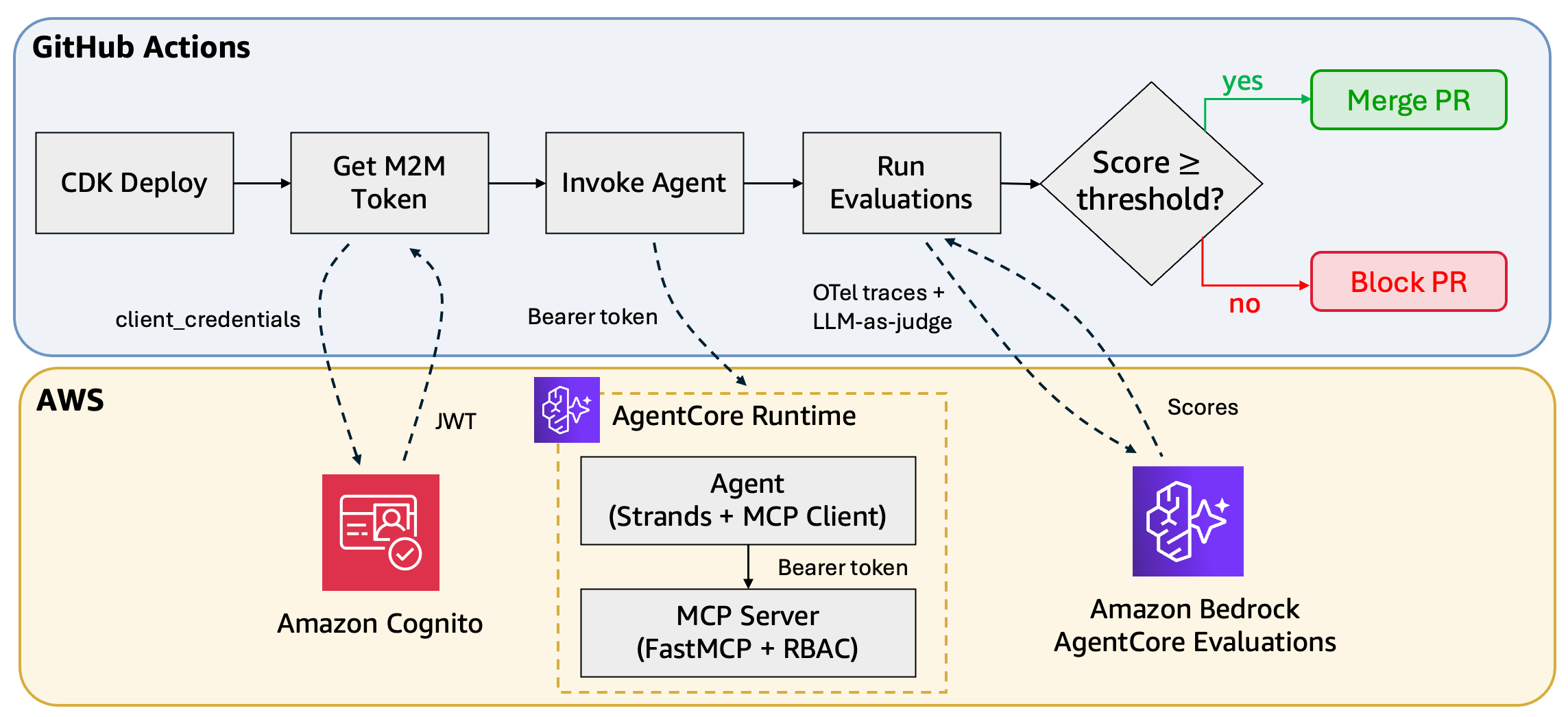
Automated Agent Evaluation via GitHub Actions

A GitHub Actions pipeline can be integrated with Amazon Bedrock AgentCore to automatically evaluate AI agent behavior. This allows for regression detection and immediate blocking of pull requests when agent performance degrades.

From AWS machine learning blog

Research1 min read

Orchard: Open Framework for AI Agent Research

Microsoft Research released Orchard, an open-source framework designed to simplify the training and evaluation of AI agents. This framework focuses on reducing complexity and enabling strong performance from smaller models, facilitating research in scalable agentic AI.

From Microsoft Research

Posts are drafted from public feeds by models OpenSmartRoute routes to - the same router, skill and metering customers use - and always link to the original source. Corrections: support.

How this blog is made

Every post is a routed request

Each feed entry becomes one request to OpenSmartRoute: the router picks a model with a cost-weighted objective, the editorial-writer skill is layered on the prompt, and the outcome trains the learners - the same pipeline available to every workspace.

Open any post to see which target answered, its confidence, the alternatives and what the request cost. Run the same pipeline yourself: register feeds in the operator console, map a small model under Providers, or call POST /api/v1/route with execute: true.