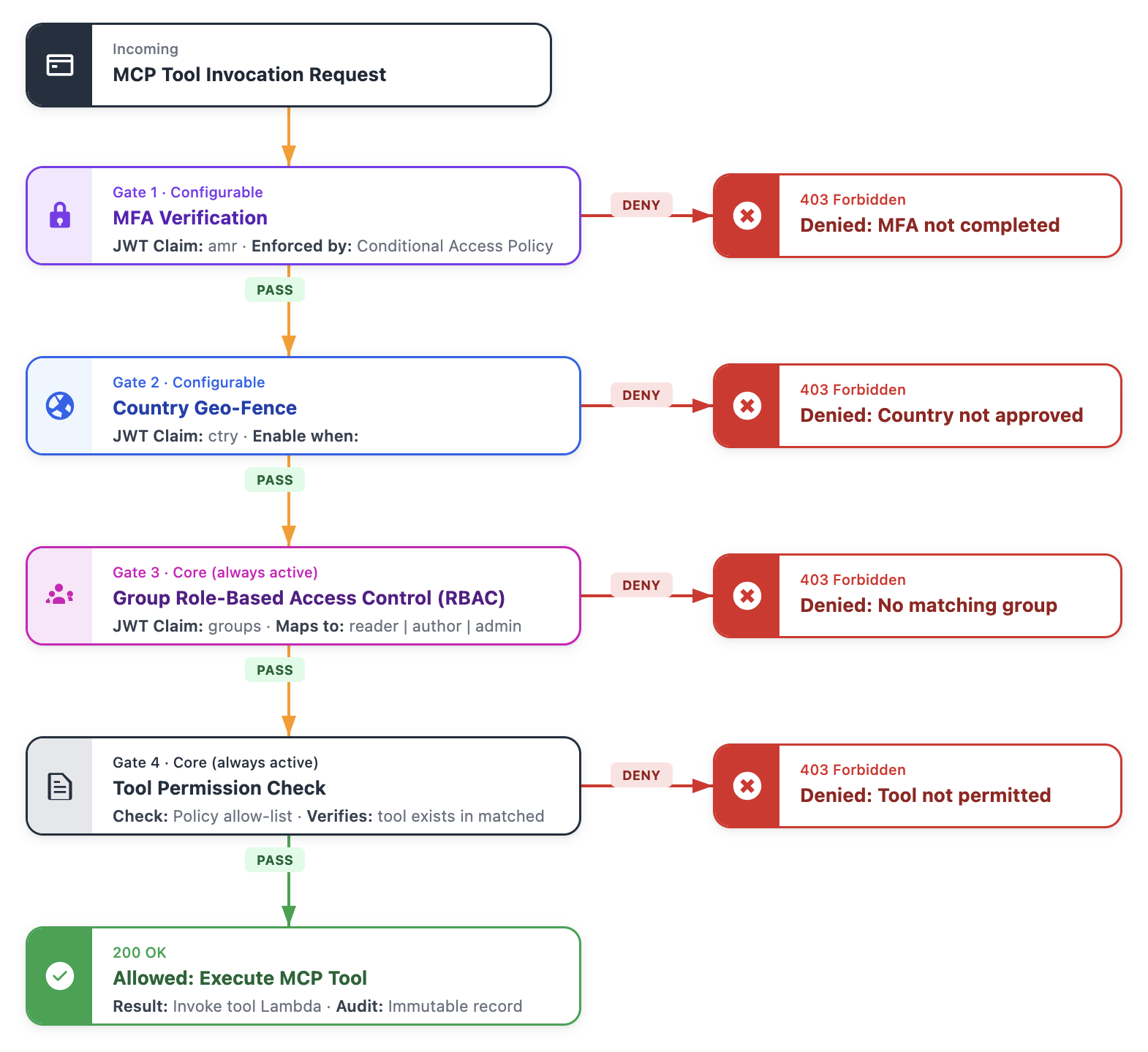
Amazon Quick uses the Model Context Protocol (MCP) to connect apps to internal tools. A valid sign-in token proves who you are, but it does not define what you can do. Without extra checks, a single mistake could let users reach sensitive data they should not touch. This guide implements a multi-gate authorization pattern using Microsoft Entra ID as the identity provider. The system evaluates OpenID Connect JSON Web Token claims through four specific security gates.
How the Gates Work
The interceptor processes requests in a fixed sequence before any business logic runs. Gate one checks for multi-factor authentication evidence inside the token itself. Gates two, three, and four handle geographic restrictions, group-to-role mapping, and tool permissions. Each gate operates independently through environment variable configuration. You can enable or disable specific gates based on your compliance needs.
Why it matters
Security teams get a complete audit trail for every mutation that passes the checks. The pattern stops over-broad tokens from accessing data beyond a user's role. Organizations in finance, healthcare, and government can enforce strict access boundaries easily. This setup sits between natural language requests and your core business logic.