LLMs1 min read
NVIDIA Launches CUDA Rust: Two Paths for GPU Programming
NVIDIA introduces CUDA Rust, offering two tracks for writing GPU kernels. This expansion aims to make GPU programming accessible to Rust developers.
From NVIDIA technical blog
Blog
Daily notes on new models, LLM releases, agent frameworks and AI research, written from the sources we follow and delivered as a newsletter every day.
Get the daily issue
Every new post of the day, in one email. Confirmation required.
LLMs1 min read
NVIDIA introduces CUDA Rust, offering two tracks for writing GPU kernels. This expansion aims to make GPU programming accessible to Rust developers.
From NVIDIA technical blog
Agents1 min read
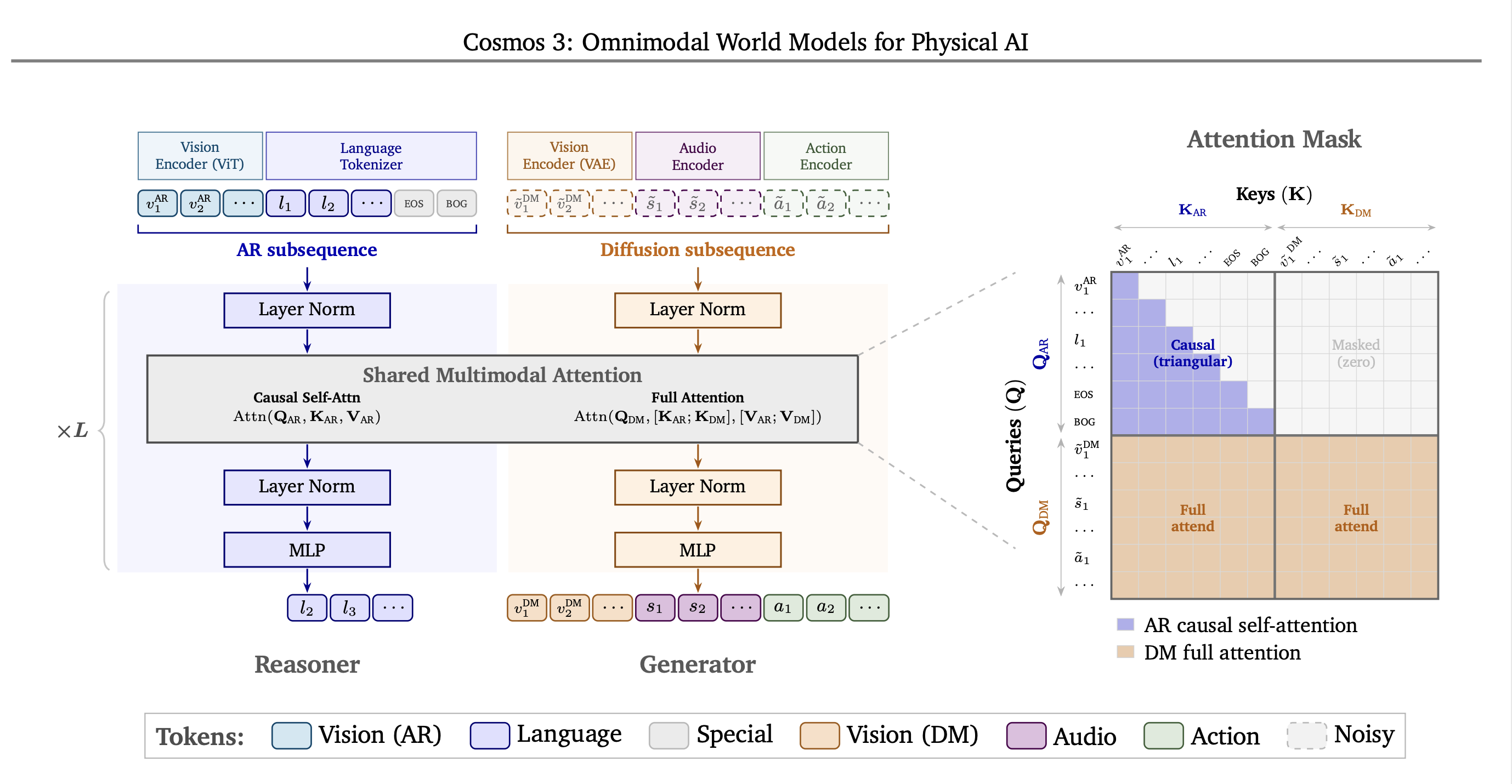
A continuous pipeline for building physical AI systems is demonstrated using NVIDIA Cosmos 3 on SageMaker HyperPod, focusing on synthetic data, training, and evaluation with GPU goodput as a key metric.
From AWS machine learning blog
How this blog is made
Each feed entry becomes one request to OpenSmartRoute: the router picks a model with a cost-weighted objective, the editorial-writer skill is layered on the prompt, and the outcome trains the learners - the same pipeline available to every workspace.
Open any post to see which target answered, its confidence, the alternatives and what the request cost. Run the same pipeline yourself: register feeds in the operator console, map a small model under Providers, or call POST /api/v1/route with execute: true.
LLMs1 min read
NVIDIA's CUDA remains central to GPU-accelerated computing, supporting scientific simulations and AI training. This article provides a detailed optimization process for CUDA workflows.
From NVIDIA technical blog
LLMs1 min read
Hugging Face announced @huggingface/kernels, offering over 200 WebGPU kernels designed for local AI processing, enabling efficient model inference on compatible hardware.
From Hugging Face blog
LLMs1 min read
The article discusses methods for organizations to size GPUs effectively for AI inference, balancing performance and total cost of ownership without overspending.
From NVIDIA technical blog
LLMs1 min read
NVIDIA TensorRT Model Connect allows engineers to deploy open AI models from checkpoint to inference using just two commands. This simplifies the deployment process and reduces the need for model-specific conversions.
From NVIDIA technical blog
LLMs1 min read
NVIDIA’s Spectrum-X Ethernet is designed to address the bandwidth challenges of distributed model training across large GPU deployments. This new technology allows for faster data transfer, crucial for scaling generative AI workloads.
From NVIDIA technical blog
LLMs1 min read
NVIDIA NVLink Fusion expands NVHBM capabilities, allowing for increased bandwidth and reduced latency between GPUs. This facilitates the execution of larger AI models and complex reasoning workloads within next-generation AI infrastructure.
From NVIDIA technical blog
LLMs1 min read
NVIDIA released CUDA Python 1.0, providing stable APIs for Python developers to access GPU acceleration. This allows for a single foundation for GPU development and full platform access.
From NVIDIA technical blog
LLMs1 min read
Dharma AI achieved a 33 point increase in GPU utilization by changing the order of model execution within a single cluster. This demonstrates the impact of efficient model sequencing on resource efficiency.
From Hugging Face blog
LLMs1 min read
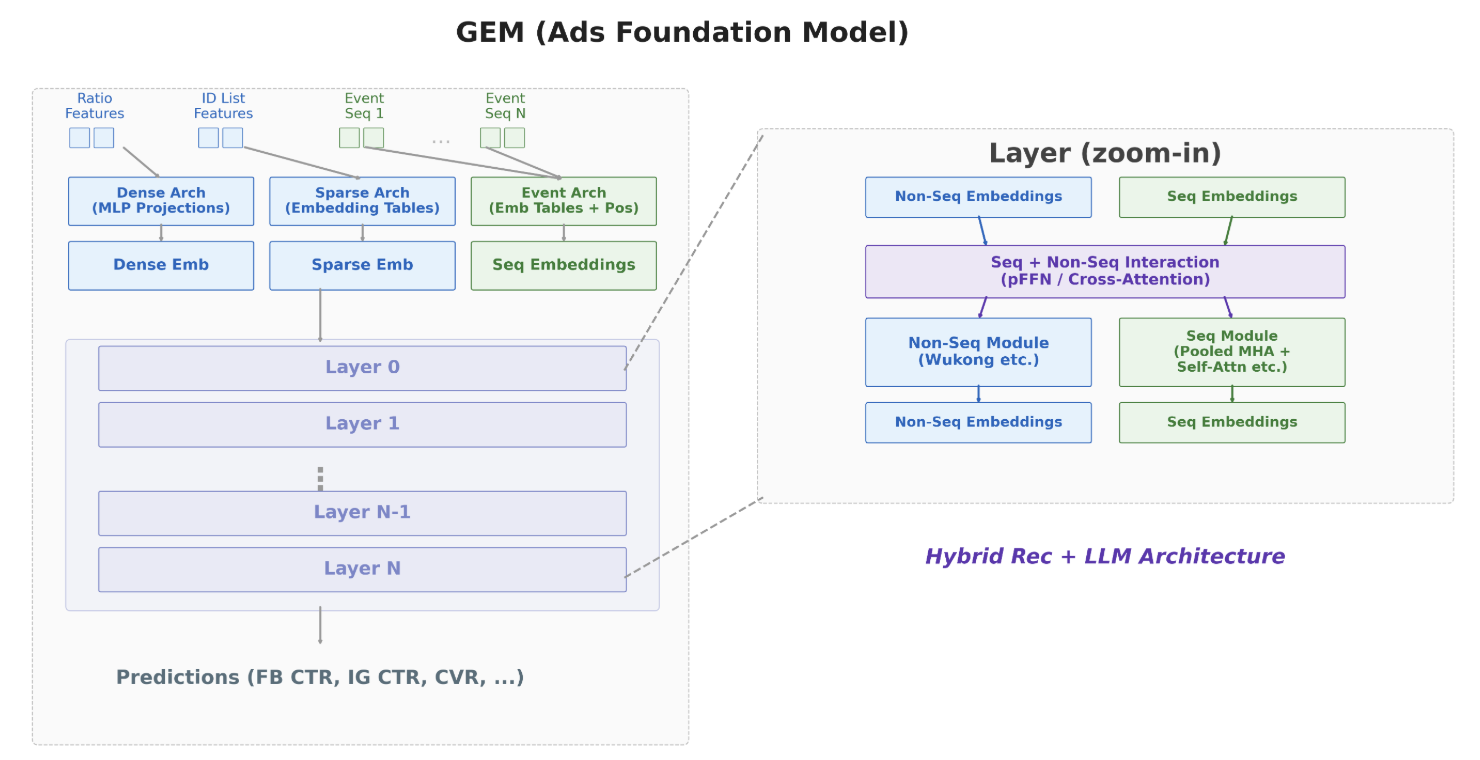
Meta’s Generative Ads Recommendation Model (GEM), the foundation model behind ads recommendations across Instagram and Facebook, now trains at LLM scale on several thousand of the latest-generation GPUs. This post goes into the details o...
From Meta AI engineering
LLMs1 min read
GPU utilization can read healthy while your queue backs up, and a new replica takes minutes to warm. Here's how to pick autoscaling metrics, tune scale-up/down windows, and budget for cold starts on dedicated inference.
From Together AI blog
Research1 min read
Researchers built K-Search to translate existing CUDA kernels into optimized MLX code for Apple chips. The system achieved near-expert performance levels without manual rewriting.
From Berkeley AI Research
LLMs1 min read
No more two-year compute contracts. Together AI and YC just gave YC startups a faster way to get GPUs.
From Together AI blog
LLMs1 min read
See how Together AI is improving production GPU clusters with passive health checks, node repair, stronger Slurm reliability, OIDC, and startup scripts.
From Together AI blog
LLMs1 min read
Provisioned Throughput gives you reserved inference capacity for frontier open models like MiniMax M3 and GLM-5.2. Token-based pricing, a 99% uptime SLA, and up to 90% lower cost than proprietary APIs. No GPU-hour math, no infrastructure...
From Together AI blog
Posts are drafted from public feeds by models OpenSmartRoute routes to - the same router, skill and metering customers use - and always link to the original source. Corrections: support.
Archive (38)